
What Is Trauma Therapy? A Complete Guide to Healing Trauma

The Cambridge dictionary defines trauma as, “severe and lasting emotional shock and pain caused by an extremely upsetting experience, or a case of such shock happening.” World renowned trauma specialist, and a reference in the field, Dr. Gabor Mate, explains trauma less in terms of medical diagnosis, but in the way it impacts our lives: “Trauma is an invisible force that shapes our lives. It shapes the way we live, the way we love and the way we make sense of the world. It is the root of our deepest wounds.”
Trauma has been identified as the root cause of, or a major contributing factor to, a plethora of mental wellness conditions and behavioral disorders: These range from Substance Use Disorders (SUDs) and depression and anxiety, to anger management issues, agoraphobia, obsessive compulsive disorders (OCD) and more.
In some cases, trauma can even cause the breakdown of lives. And sometimes, you are not even aware that trauma is the culprit. Why? Because you may believe you have been loved and cared for throughout your life and have had no brutal or violent experiences that might have traumatized you. But it is essential to understand that trauma is as much about a person’s subjective interpretation of an experience, as it is about the experience itself. Things that may seem fairly benign to an outsider may have left deep wounds within you.
What is Trauma Therapy?
The term trauma therapy refers to the different approaches and therapeutic processes implemented to address the symptoms of psychological trauma – whether or not you have a formal diagnosis of a recognized disorder, such as Post Traumatic Stress Disorder (PTSD). Trauma therapy combines various forms of treatment, such as psychotherapy and counselling, but also body-centered mental health healing modalities such as somatic therapy. The former category focuses mainly on the psyche and on processing and integrating traumatic memories, in order to free you of the power these residual traces of trauma in your mind have over you. Body-based approaches focus more on how trauma is stored in the body, rather than the mind, in the form of tension, tightness, and nervous system disturbance.
In all cases, the aim of trauma therapy is to unburden you of the interference of trauma in your life, as described by Dr. Mate. Over time, and although it may be difficult to believe, you can hope to be entirely free of the effects of trauma. At the very least, modern, evidence-based trauma therapies consistently produce durable positive outcomes, and you should have complete faith that trauma therapy can reduce your symptoms to manageable levels, allowing you to return to a fulfilling and happy life.
At Yatra centre, we have created our own trauma therapy program, based on what we have observed are currently the most efficient ways of treating trauma in all its forms, and whatever its causes. We tailor our programs to meet the specific needs of each individual, and together, we chart the best path to help you move forward.
Who Can Trauma Therapy Help?

There are many different kinds of trauma, but all have one point in common: they cause you great psychological emotional suffering, and this often spills over onto those around you – family, colleagues and colleagues.
Some traumas are caused by specific distressing events, or sequences of events, such as what may be experienced during active service in war zones, automobile accidents, natural disasters and so on. This includes trauma caused by injuries resulting from these circumstances. Other kinds of trauma are linked to a given period in life, quite often childhood, and may be caused by psychological or physical abuse, including sexual abuse, abandonment and material insecurity.
There’s also generational trauma, for example when one person’s pain and frustration express itself as violence and alcohol abuse, which is then passed down to their children, These children, in turn, then find themselves repeating the pattern, also using alcohol to cope and taking out their misery on their own children, in the form of domestic violence.
The loss of a loved one, particularly when it is sudden or occurs in tragic circumstances, can also cause deep trauma. These wounds may persist long after the initial period of grief and loss is over. For some people, such as an elderly person who may feel lonely and have only a pet for company, the loss of their animal companion can be equally traumatic.
An unsustainable, ongoing situation is another frequent cause of trauma. A toxic work or family environment, where you feel, for example, constantly under threat, scrutinized, verbally and emotionally abused, belittled, overworked and overwhelmed, can also cause severe trauma and put you constantly on edge, with your nervous system completely out of whack.
And, as mentioned above, even events or circumstances that do not appear threatening or dangerous on the surface, can cause trauma, especially in children, who are particularly sensitive and vulnerable, such as when exposed to insecurity. Parents who are never present, for example, due to unmanageable workloads, can create in a child a sense of neglect.
A parent in the armed forces, or in another profession that leads to constant moves and uprooting, can lead to deep seated insecurity. Not to mention difficulty in making friends or feeling settled, out of fear that these friends and your home will soon be lost once again, and you’ll have to start over for the umpteenth time. Any experience which instils in you fear for your security, or even survival, whether seemingly justified or not, can cause lived trauma.
Whatever the cause of your trauma or its nature, trauma therapy can help. Among the most common and most disruptive symptoms therapy can help with are the following:
- Feeling trapped in past experiences
- Feeling intensely anxiety, fearful, or emotionally numb
- Experiencing flashbacks or nightmares
- Struggling with trust and safety in relationships
How does Trauma Therapy Work?

The goal of trauma therapy is not to erase memories, or to push them into a distant past, just as you might delete a computer file or drag and drop it into the trash. Nor is it to dismiss past traumatic events and to reprogram yourself so you see them as “not such a big deal”, things you can “handle”, or “all in a day’s work” (for example, in the case of military personnel, first responders, and so on).
Trauma therapy works by helping you process what happened to you, make your peace with it, forgive what needs forgiving, release what needs to be released, and regain a healthy sense of self-reliance, self-empowerment, and balance. It helps you resurface, get back on your feet, and no longer be at the mercy of your inner wounds and accumulated pain. You feel safer and better able to manage and control your life. As a result, you find yourself once again able to enjoy, and contribute positively to, healthy relationships. You make better decisions, have more clarity of mind, and greater emotional stability.
Trauma therapy follows no fixed or immutable order of proceedings, but often unfolds in a sequence similar to the one below. The therapy process helps you:
- Understand the full extent of how trauma is affecting you: your thoughts, your feelings, your reactions and responses, and your physical body (for example your nervous and endocrine systems).
- Process painful memories in a safe way, for example by revisiting them under the guidance and with the accompaniment of a therapist, by releasing them from where they are stored as somatic memory in the body, and so on.
- The above in general leads to decreased anxiety, reduced tension, less flashbacks and disturbed sleep, reduced numbness and regaining feeling, and so on.
- Build and cultivate coping skills, to increase mental and emotional resilience, and to regain a sense of self-empowerment.
Different Trauma Therapy Modalities
As a trauma sufferer, you will have noticed and recognized the unmistakable symptoms you experience, on a mental and emotional level. But you may not be aware of the more subtle effects of trauma, on your moods, your response patterns to people and situations, or self-protection mechanisms that may have emerged. You may also not have realized just how much your trauma is affecting your physical health: the state of your nervous system, your endocrine system, digestion, sexual energy, and more.
The most effective way to address these different aspects of trauma, is often to combine two or more forms of therapy, which complement each other. This can help regulate your nervous system and return your body to homeostasis, while also working on the psychological disturbances you experience.
It has long been widely assumed that it takes a long time to heal severe emotional pain. But the therapies below consistently demonstrate this is not the case, producing positive outcomes after only a limited number of sessions. Just as the body can heal itself of physical trauma, the mind can also be healed of psychological trauma.
Eye Movement Desensitization and Reprogramming – EMDR

Eye Movement Desensitization and Reprogramming is a therapy developed by Dr. Francine Shapiro in the late 1980s. She noticed that when distressing memories came up for her, she would spontaneously begin making eye movements, which seemed to reduce the emotional charge of these memories. She began wondering whether eye movement could be used with intention, with a therapeutic goal in mind. to help others process their own traumatic memories. Shapiro added a cognitive component (deliberate recollection of distressing events) and created the structured approach now known as EMDR.
During EMDR, you are invited to come back to a traumatic memory while engaging in bilateral stimulation. This is often in the form of intentional side-to-side eye movements, while following the therapist’s finger or a light, though it can also be listening to sounds alternating in each ear, or tapping each side of your body. This distracts your brain from reliving the memory in its full force, by giving it a task. The result seems to be that your mind becomes desensitized to the intensity of the memory, and reprograms how it is stored.
On average, 5 sessions of EMDR trauma therapy is enough to reduce the severity of PTSD symptoms, with some people even losing their PTSD diagnosis following this course of treatment.
CBT for Trauma
Unlike EMDR, trauma focused Cognitive Behavioural Therapy does not require you to proactively recall traumatic memories. Rather, the aim is to help you become aware of, pay attention to, and subsequently change, how you think, feel and behave in response to the trauma you carry.
After a traumatic experience, people have a tendency to develop new beliefs or engage in new recurring thought patterns, in an attempt to feel safe or to come to terms with what happened. Thoughts like, “potential threats are everywhere”, “What happened was my fault,” or, “Something bad happened once, how do I know it won’t happen again?” are commonplace.
Such thoughts, and the negative feelings that accompany them, can keep you in a constant state of low-key fear. This can begin to interfere with your ability to function normally in the world, and can certainly make your life miserable
During CBT sessions, the therapist guides you in identifying mental patterns of this nature, and invites you to question them. Are they really true, and are they serving you? If so, how? You then look at ways in which to reframe your mental narrative, and change it to a more positive, empowering one. For example, you could change the examples above to, “I am safe here and now, and that is enough,” or “I see all the good things currently happening or beginning in my life.”
To support this restructuring of your habitual, go-to thought processes, CBT for trauma also makes use of tools such as breathing exercises, grounding and relaxation techniques, as well as methods to help with emotional regulation. A course of trauma-focused CBT often lasts 10 to 15 sessions.
Internal Family Systems – IFS
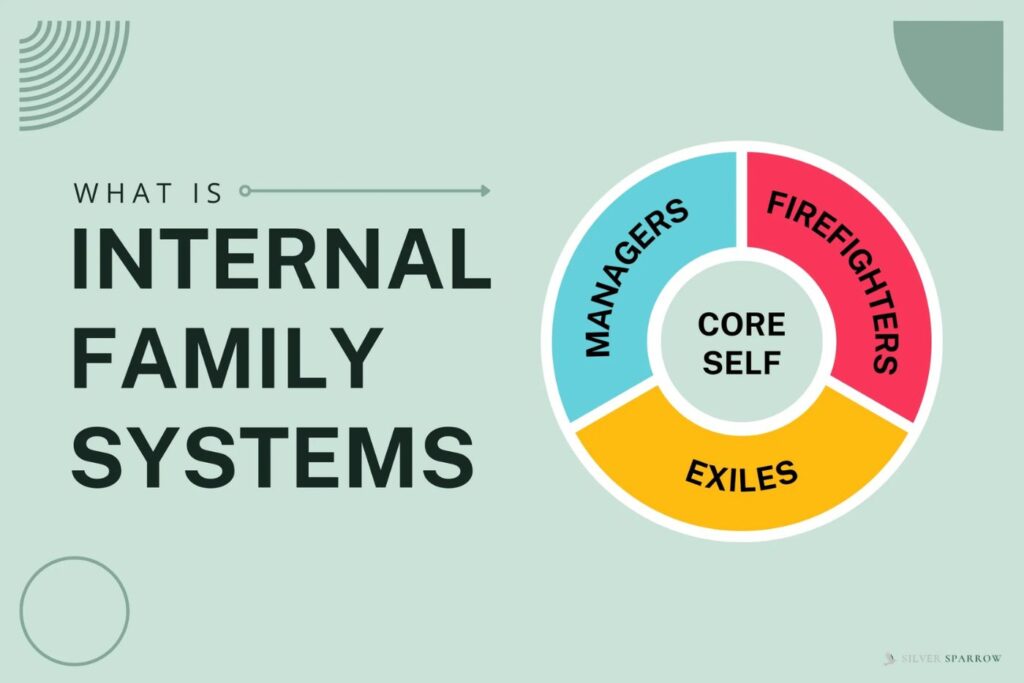
Internal Family Systems – IFS – is a ground-breaking and remarkable form of therapy perfectly suited to addressing trauma, as well as a great many other mental wellness issues, including those that often co-occur alongside trauma. IFS is a form of psychotherapy that sees the mind as being composed of multiple parts. These parts are sometimes referred to as sub-personalities. The personalities all have a role to play, but they also all have their own sets of feelings and perspectives. The sum total of these parts makes up who you are, but these sub-personalities do not always cohabit harmoniously. They may have conflicting agendas, needs, and different emotional wounds.
The three main types of sub-personality are:
- Managers: managers try and keep you in control of your life and circumstances, and to keep you out of pain and conflict.
- Firefighters: firefighters are “first responders” when feelings get overwhelming. This may lead to a desire to escape, numb yourself or simply avoid what you’re feeling.
- Last but not least, exiles: exiles are often the wounded parts of you, that hold shame and fear, or grief and loss. They are ones that carry the weight of past trauma.
At the centre of these parts is the Self, who you are at your core, and when the Self successfully plays the role of moderator, mental balance and health are restored.
Somatic Experiencing
Somatic experiencing is a rather different form of trauma therapy, since it focuses on the physical sensations (somatic experience) in your body related to past trauma. It is based on the core premise that trauma often get stored in the body, in the form of trapped survival energy. This happens when the body’s fight, flight or freeze response is never fully completed. The burst of energy created in order to face danger does not get properly dissipated, or fully evacuated, and the nervous system can remain primed to respond to threat.
Somatic experiencing allows your body and nervous system to complete those unfinished survival responses, so that your nerves can return to a state of balance, and your entire system to a state of relaxation.
During a session, the therapist guides you through a body scan, to help you identify certain sensations such as tension in the muscles, stiffness or soreness in joints or elsewhere, tingling, numbness, tightness around the chest, as well as habits such as shallow breathing and contraction. You are then invited to bring awareness into those areas, and, when possible, to release.
However, since these bodily sensations are linked to stored trauma, this process of letting go can be quite powerful and unsettling, as the pain of the trauma resurfaces before exiting your body. That’s why therapists use a technique called “pendulation”, guiding you back and forth between the discomfort of these sensations and the act of releasing, and the comfort and security of other sensations, and the safe space you are in. Slowly you relearn, on a deep, visceral level, what it’s like to feel truly secure.
Talk Therapy
Traditional talk therapy is generally no longer seen as a first-line treatment for trauma. However, it still has its place within trauma therapy, in certain circumstances. If your nervous system is severely dysregulated, or if you suffer from other symptoms such as mood swings or emotional instability, you may be too fragile to dive straight into full-on therapy sessions. While your nervous system begins to recover, and you regain resilience, talk therapy can be a good way to start speaking about what you’ve been through. It may help you get things off your chest, while you confide in your healthcare professional. Your trauma therapist will make sure you feel heard, understood, and in good hands.
What are Trauma Therapy Sessions Like?

The therapies outlined above generally involve one-on-one sessions with a trained professional, in a safe, quiet environment. However, CBT and talk therapy may at times be conducted in small groups. The exact procedure differs from one therapeutic modality to another, but generally unfolds in three stages.
- Preparation and introduction: the therapist helps you relax and settle down. You may set an intention for the session, or choose a specific topic or traumatic memory to work on.
- Therapy proper: the therapist guides you through the process of their given method, until they feel you have worked through the issue set as the session goal, or processed enough for one session.
- The therapist helps you return to normal awareness and checks in with you regarding how you feel the session went, taking onboard your feedback.
Supporting Therapies
Certain therapeutic modalities and activities, while not seen as trauma therapy per se, can complement your therapy program in very beneficial ways. These therapies help calm your nervous system, quieten your mind, and improve your general sense of well-being.
The multiple benefits of yoga require no further demonstration. Yoga helps increase mobility, improves posture, digestion and quality of sleep. It cultivates focus and the ability to relax on command. Movement therapy has similar effects – gentle movement improves concentration a sense of ease in the body, and helps ground you when you feel agitated. Cold therapy has countless benefits, and even just a few minutes of daily exposure to cold, in the form of ice baths, cold showers, or being outdoors in low temperatures, boosts immunity, brings clarity of mind, and improves mood. Art and music therapy are also very beneficial, as outlets for creativity, and activities that have a profoundly soothing effect on the mind and emotions.
At Yatra Centre, we provide trauma therapy programs tailored to best suit your profile and to meet your personal needs. We incorporate all major first-line and complementary therapies that are currently seen as at the forefront of trauma therapy worldwide. Healing from trauma and achieving full recovery can be a lonely journey, on that is very difficult to accomplish alone. Thankfully, modern-day, cutting-edge trauma therapy can make freedom from past trauma a reality. If you are read to take the plunge, contact us on +66 96 916 3287.

Mike Miller
Founder & Clinical Director
Mike Miller is a Certified Clinical Trauma Professional, Certified Addiction Therapist, and EMDR Therapist with advanced training in trauma and mental health. He has over 20 years experience delivering behavioural health treatment to clients internationally. As a leading trauma expert, Mike developed the Yatra programme in 2022 to accelerate healing and support lasting transformation.
Subscribe to our newsletter.
Subscribe to our newsletter and join a supportive community dedicated to understanding, overcoming, and transforming personal trauma.
Related Articles

What Is Somatic Therapy? How the Body Heals Trauma
The word ‘somatic’ is derived from the Greek ‘soma’, meaning body. ‘Somatic’ refers to that which…...

Can Trauma Lead to Hypersexual Behavior? A Closer Look
Trauma can disrupt a person’s life in multiple ways, to the point of affecting aspects of…...

Why a Somatic Healing Retreat Might Be Exactly What You Need
You’ve tried therapy. You’ve read the books. You’ve done your best to manage stress, anxiety, or…...

Can PTSD Meds for Nightmares Help You Sleep?
Research from the National Center for PTSD shows that over 90% of Vietnam vets with post‑traumatic…...