
What Is Somatic Therapy? How the Body Heals Trauma

The word ‘somatic’ is derived from the Greek ‘soma’, meaning body. ‘Somatic’ refers to that which relates to the body, or, in a medical context, to the physical symptoms or effects of a condition. In recent decades, therapists have come to realize the significance of the somatic aspects of mental and emotional disorders, and the importance of addressing them in order to help sufferers of trauma and other ailments fully heal.
In the early 20th century, Austrian psychoanalyst and doctor, Wilhelm Reich, was the first to postulate that intense emotional experiences are stored in various areas and systems of the body. This was most noticeably expressed, he discovered, as muscle tension – which he referred to as ‘body armor’. Subsequently, in the early 1970s, Dr. Peter A. Levine, who had himself been through traumatic experiences, began to focus particularly on the physiological impact of trauma on the nervous system, and how it gets locked away there. Dr. Levine also believed in the body’s natural ability to heal itself, and by the late 1980s he had created a body-centered therapy he named Somatic Experiencing, which he used to treat disorders such as depression, anxiety and PTSD.
The somatic approach has since further broadened to include modalities focusing on intentional movement, breathing and body awareness, in order to release traumatic memories held in body tissues.
At Yatra Centre in Krabi, Thailand, somatic therapy has been a core element of our foundational therapy program for many years. Over the course of time, we have witnessed how the somatic approach consistently helps unlock deep-seated trauma in the body, allowing your system to shed the burden of past pain. This seems to be particularly the case when somatic therapy is combined in an integrative way with the other frontline, trauma-focused therapies that we practice.
What is Somatic Therapy?
Somatic therapy is an approach to mental health treatment in which you focus on physical sensations or physical movement, in order to identify areas where trauma, emotional pain, or accumulated stress may be stored in the body. Somatic therapy then uses a range of techniques to help you process and release this built-up tension and any associated painful memories. It utilizes the mind-body connection in a holistic way.
Somatic therapy is an invitation to explore how your body has responded to intense emotional pain and distressing experiences. Bodily symptoms help you identify how your body has ‘coped’ – for example by tensing, stiffening, contracting, or numbing, or by adopting new and unharmonious patterns of breathing and posture. Under the guidance of a qualified therapist, you are then able to heal your mind and emotions by bringing your attention, and your healing intention, to the areas of your body where pain is physically embodied.
The nervous system is often the greatest repository of trauma and tension, so resolving nervous system imbalance is always a priority in somatic therapy.
Who Can Benefit from Somatic Therapy?

Somatic therapy has demonstrated beneficial outcomes in treating a range of mental health conditions, most notably:
- Post Traumatic Stress Disorder
- Depression and anxiety
- Chronic stress-related disorders
- Chronic ailments, or problems accompanied by recurring physical symptoms, such as fatigue, listlessness, heaviness in the limbs, and so on.
Those suffering from nervous system dysregulation following grief or loss, constant exposure to pressure or abuse at work or in the home, may also find relief through somatic therapy.
The somatic approach is often recommended if you’ve tried other therapies but have experienced only partial relief. This is particularly the case if you started therapy after the trauma has already ‘taken up residence’, as it were, in your body, and is well established there. In such cases, processing your trauma on the level of the mind and emotions is often not enough to dislodge it from your body.
How Somatic Therapy Differs from Other Therapies
Somatic therapy is a therapeutic approach that works with your mind and body in their current condition. It focuses on outcomes that enable a trauma-free future. This differs from most other evidence-based trauma therapies, since it does not require you to proactively revisit past memories (though painful images of the past may arise as traces of these memories are physically released from the body). Nor are you asked to work on changing your patterns of response to flashbacks and triggers, or your daily behaviors.
Somatic therapy is a very grounded approach, which guides you in exploring your direct, tangible, somatic experience in the present, in order to access the places in your body where trauma has been stored away – often in the form of trapped survival energy.
That being said, somatic therapy is highly compatible with other evidence-based trauma focused therapies, such as Eye Movement Desensitization and Reprogramming (EMDR), Cognitive Behavioural Therapy (CBT), or Internal Family Systems (IFS).
How Does Somatic Therapy Work?
A simple way of understanding how somatic therapy works is as follows: when trauma gets trapped in the nervous system or other parts of the body, think of it as pent-up energy. During traumatic experiences, the nervous system immediately engages the fight, flight or freeze response. Just like an army mobilizing emergency troops on the front line, your body mobilizes a huge amount of nervous energy, so that there is power available for the essential task of keeping you alive and getting you to safety.
Unfortunately, when the distressing experience is more than just a minor scare or a brief moment of panic, this energy does not get dissipated or evacuated once the immediate danger has passed. You are left with a significant load of energy still trapped in your system, a heavy emotional charge that has not been “flushed out” and becomes a taxing burden on you.

The core aim, then, of somatic therapy, is to release this energy related to intense emotional or traumatic experiences, so that none of it remains trapped in the nervous system or elsewhere.
In order to help you achieve this release and healing, somatic therapists have access to a number of body-mind techniques.
In somatic therapy, a therapist might guide you to:
- Scan your body for any discomfort or unusual sensations
- Pay special attention to any you find – tightness in the chest, clenched jaw, tension in the throat, throbbing, tingling, numbness and so on.
- See if certain memories appear to be associated with given areas of physical unease – when you focus on a particular area, does a specific past experience come to mind?
- Use breathing, movement, or grounding exercises to release stored trauma. You may also focus intently on a given area while gently directing it to let go of tension – sometimes this causes the sensation to shift, and set the trapped energy in motion. In this case, you allow the energy and any changing sensations to move through your body: This is the foundational process used in Somatic Experiencing, one of the most defining approaches used in somatic therapy.
This interactive process of listening to your body and responding to, or taking action around, sensations or signals from it, is referred to as interoception.
After a number of sessions, once you and your therapist know each other better, you are used to the procedure, and perhaps ready to go deeper, you may be guided through further processes.
- Pendulation: the therapist first helps you first enter a relaxed state, then, when you are ready, you move into locating sensations to work on, and releasing them. This may be accompanied by difficult memories. You then exit the challenging episode and are guided back to a relaxed state. If appropriate, you may make several incursions into trauma trapped in your body, each time returning to feelings of safety and relaxation.
- titration, during which you are guided through a traumatic memory while you consciously take note of any accompanying physical sensations, and then address them in real time. This can be particularly useful if, for example, you’ve already worked on the places of greatest discomfort in your body, but your worst traumatic memories don’t seem to have come up. Titration can help unearth where those heavy memories ended up getting stuck.
- resourcing, which helps you recall resources you have previously called upon or sought out – strategies, tools, books, people or groups, even pets – to cultivate a sense of security and feeling supported.
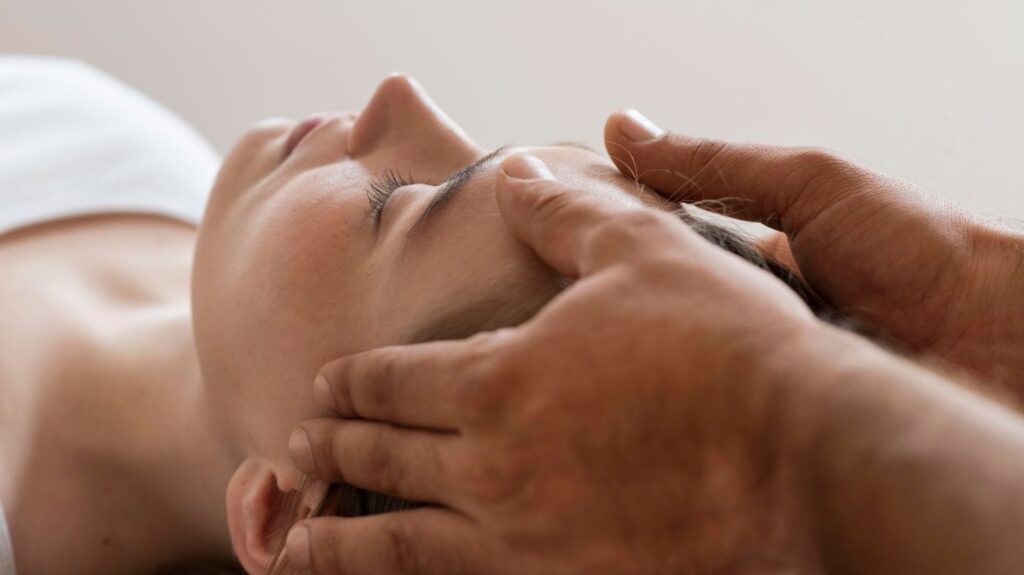
Further tools may be suggested or used in somatic therapy, such as acupressure, massage and other body work, breathwork, or even more dynamic activities such as movement therapy and dance. Some practices, such as yoga, or music and art therapy, are especially powerful in helping balance and strengthen your nervous system, and inducing states of deep calm and relaxation.
Why Try Somatic Therapy?
There are a number of reasons that might make you wish to explore somatic therapy. These include:
- You have tried other forms of therapy, and seen little improvement in your symptoms or levels of mental and emotional well-being. Even when you are able to lessen the emotional charge of traumatic memories thanks to other modalities, it’s hard to feel great if there is still trauma locked in your body, interfering with energy flow and letting go.
- If you still have persisting physical symptoms you never had prior to your traumatic experience, in spite of other therapies. This is a clear indication that approaching your trauma only from the level of mind and emotions may not be enough to get rid of its traces in your system.
- You waited a long time after your traumatic experience before seeking professional, therapeutic help. In this case, residual trauma in the body may have firmly established itself, even creating new habitual patterns, that may affect your posture or breathing, and cause tightness and constriction in various areas of your body.
- If you are someone who has never really befriended your body or learned to listen to it. If you have never enjoyed sports or exercise, or never taken up an activity that involves moving your body, your level of body awareness may be very low. Somatic therapy can help you finally get more in touch with your physical dimension, so that you become attuned to your body and receptive to its messages.
- As a complement to other therapies. Even if you are experiencing emotional release and greater happiness thanks to other approaches, you nevertheless find you don’t feel as free and at ease in your body as you used to. Somatic therapy can help you regain mobility and find greater relaxation. As rigidity melts away in your body, you are likely to find you have more flexibility and adaptability in your thinking too.
How The Body Heals from Trauma
As you begin to heal from your trauma, your body will start to recalibrate and return to a stage of homeostasis, which benefits all your systems. Every cell within you will begin to respond joyfully to the shedding of pain and the release of blocked survival energy. You will notice a range of positive changes, but all of these start with the foundation of your physical recovery – the nervous system.
- For many trauma sufferers, it has been months, or even years, since their nervous system was last fully relaxed. Their nerves remain in a state of low-key vigilance, on the alert for possible threats This drains you of vital energy – in the same way too many apps running in the background on your devices drain their batteries. When your nervous system begins to settle once again, it has a ripple effect throughout your body. Sleep and digestion improve. Your emotional resilience increases. You are less easily thrown off balance by potential triggers. Your capacity for enjoyment – in the moment – expands once again. You become more comfortable in your own company, and less prone to compulsive scrolling, binge watching online or other activities to distract and entertain you.
- Your endocrine system heals. Trauma affects not just your nerves, but also your hormones. Stress and tension directly impact the endocrine system – the network of organs and glands which produce the hormones in your bloodstream. These regulate and govern essential functions in the body, such as metabolism, growth, cellular healing and regeneration, reproduction, mood, and more. As your endocrine system heals, things like weight loss become easier, as does regaining muscle mass. Mood swings even out. Appetite returns – both literally and figuratively – and you find you have more zest for life.
- Sexual energy returns. Stress and nervous system/endocrine system imbalance greatly affect sex drive. The effects of past trauma may also impact your ability to enjoy sexual intimacy, even when it is present. As the blockages in your body and psyche dissolve, sexual health also begins to come back to you. On a psychological level, you may find that your creativity comes back to life also.

Yatra Centre in Krabi, Thailand
The Romans said it two thousand years ago: “A healthy mind in a healthy body.” And Traditional Chinese Medicine has for centuries recognized the link between thoughts, emotions and the health of the body – namely that certain, specific emotions impact their corresponding organs; and vice versa.
Modern psychotherapy is still continuing to grasp the power of the body-brain axis, and the profound implications its existence has on both mental and physical health. And although the complexity of the two-way communication between the mind and all the systems – every part of your body – is not yet fully understood, somatic therapy is able to make use of it in powerfully healing ways.
For the average person, the mind-body connection is generally seen as one-directional: for example, as the power that thoughts and emotions – both positive and negative – can have over your state of health.
Somatic therapy follows the mind-brain communication highway the other way around: by working on the condition of the body in order to heal thoughts and emotions. Even when it comes to the deepest trauma wounds.
At Yatra Centre in Thailand, our focus has always been on a holistic approach to trauma, that takes into account every aspect of your being. Our idyllic location in Krabi, on the south coast of Thailand, and the environment we have created at our centre, make it the ideal place to allow your nervous system to finally reset. We are firm believers that different therapeutic approaches often complement each other, and that their association can accelerate the healing process. That’s why somatic therapy is an integral part of our treatment programs.
If you feel you are ready to take the plunge and address your trauma on a mental, emotional and physical level, contact Yatra Centre today to discuss your needs with us.

Mike Miller
Founder & Clinical Director
Mike Miller is a Certified Clinical Trauma Professional, Certified Addiction Therapist, and EMDR Therapist with advanced training in trauma and mental health. He has over 20 years experience delivering behavioural health treatment to clients internationally. As a leading trauma expert, Mike developed the Yatra programme in 2022 to accelerate healing and support lasting transformation.
Subscribe to our newsletter.
Subscribe to our newsletter and join a supportive community dedicated to understanding, overcoming, and transforming personal trauma.
Related Articles

What Is Trauma Therapy? A Complete Guide to Healing Trauma
The Cambridge dictionary defines trauma as, “severe and lasting emotional shock and pain caused by an…...

Can Trauma Lead to Hypersexual Behavior? A Closer Look
Trauma can disrupt a person’s life in multiple ways, to the point of affecting aspects of…...

Why a Somatic Healing Retreat Might Be Exactly What You Need
You’ve tried therapy. You’ve read the books. You’ve done your best to manage stress, anxiety, or…...

Trauma Healing and Rehab in Thailand: An Interview with Yatra
Addiction and unresolved trauma affect millions of individuals and families around the world. These challenges are…...